Few dental topics attract as much marketing as whitening. Charcoal powders, purple serums, LED kits, "enamel-safe" strips — the shelves are full and the claims are loud. Here's the evidence-based short version.
What actually whitens teeth
Only one family of ingredients truly lightens the colour inside the tooth: peroxides (hydrogen or carbamide peroxide). Everything else either polishes surface stains or does nothing measurable. The difference between products is concentration, contact time and supervision.
In-clinic whitening
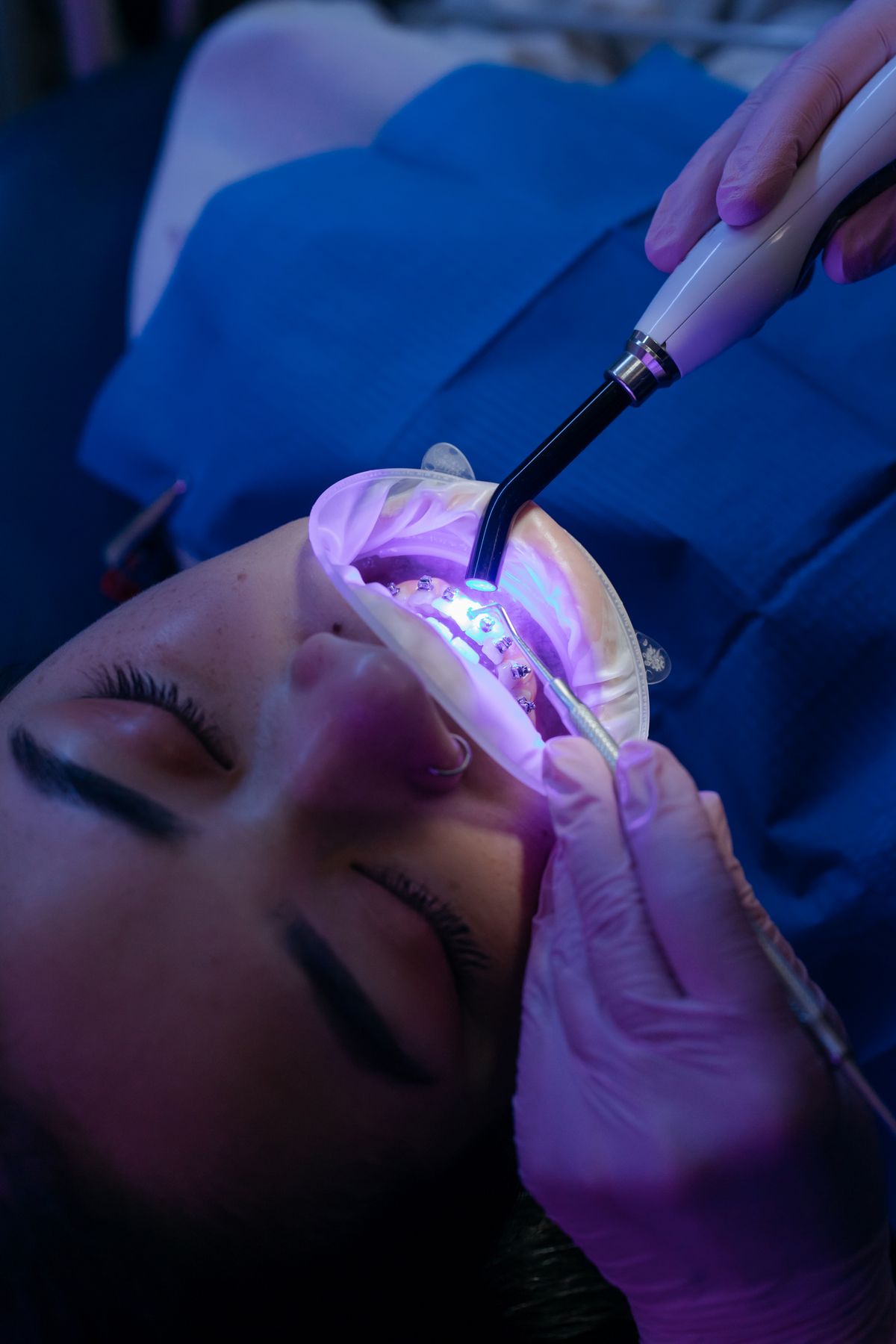
Professional whitening uses higher-strength peroxide with your gums properly protected, delivering a visible change in a single one-hour session. It's the fastest, most controlled option — and the right one before big events.
Dentist-made home trays
Custom trays with milder gel, worn for a couple of weeks at home, reach nearly the same endpoint more gradually and let you top up later. Many patients combine both: a clinic session, then trays for maintenance.
What to skip
Charcoal and "whitening" powders are abrasives. They scratch off surface stain — and with daily use, enamel itself. Enamel doesn't grow back.
Over-the-counter strips do contain low-dose peroxide and can help mild cases, but uneven contact often means patchy results, and unsupervised overuse causes sensitivity.
One thing before any whitening
Whitening healthy teeth is safe. Whitening over cavities, leaking fillings or inflamed gums is not — the gel finds every weakness. A quick checkup first isn't upselling; it's the difference between a bright smile and a sensitive month.